floridachest
  • Welcome
  • Services
    • Lung health services
    • Sleep Medicine
  • Patients
  • Our Team
    • FAQ
  • News
  • About us
  • Contact
  • en English
    • en English
    • es Español
  • Menu Menu
  • Welcome
  • Services
    • Lung health services
    • Sleep Medicine
  • Patients
  • Our Team
    • FAQ
  • News
  • About us
  • Contact

Tag Archive for: pulmonary associates of brandon

5 Things We Are Thankful For This Thanksgiving

21 noviembre, 2018/in For Pulmonary Patients

Thanksgiving is a unique holiday for Pulmonary Associates of Brandon, one that gives us an opportunity to show our appreciation to all the people who have walked through our doors over the years, and the many factors that contribute to the overall well-being and success of our patients and the healthcare industry as a whole. While we’re thankful for a lot of things every single day of our lives, today we would like to share 5 special things we are particularly thankful for this Thanksgiving:

We are grateful for our precious patients who entrust their health to us.

Our dear patients, we are truly thankful for having you in our lives! Our first and foremost goal is to make you happy and healthy – you are our friends, teachers, and the main motivation to grow personally and professionally every day. It warms our hearts to read your reviews and realize that we were granted an exceptional chance to impact someone’s life, and another patient was able to fight a lung cancer or any other life-threatening condition. We truly hope that you will never experience any health issues, but if you ever need help, we are here to provide pulmonary and sleep care you will love. Our hearts chose to serve you and we will stand by our pledges in any circumstances.

We are thankful for our brilliant Pulmonary Associates of Brandon team.

Did you know that every Pulmonary Associates of Brandon team member is unique in his/her own ways? Our team is full of compassionate and clever people who always strive for success and go out of their way to help each and every single person that walks through our doors. It’s a pleasure to work with a healthcare team that supports each other and shares common values. Wondering what makes our practice so special? The answer is obvious: our staff and physicians that absolutely love what they do!

We are thankful for the research opportunities that advance healthcare worldwide.

Pulmonary Associates of Brandon Clinical Research is a multi-specialty research center dedicated to offering our patients the highest quality of care, cutting-edge technology, and research trials that make a positive difference. This Thanksgiving we’re thankful for the opportunity to conduct research studies because FDA approved research is a crucial part of discovering new treatments and devices for existing medical conditions worldwide. So far, our center has participated in more than 125 clinical trials in the areas of COPD, Asthma, Irritable Bowel Syndrome, Diabetic Painful Neuropathy, Sleep Apnea, and much more. Our research findings have helped hundreds of patients to receive advanced treatment that was never used before and opened the door to new treatment methods worldwide.

We are grateful for our sleep disorder center that helps dozens of patients every day.

For millions of Americans, getting a good night’s sleep and waking up rested can be quite difficult. Did you know that more than 100 million Americans of all ages regularly fail to get a good night’s sleep? That’s why we are grateful for an exceptional opportunity to help our patients explore the underlying causes of their sleep problems and find the most effective ways to treat them. We understand the importance of a proper sleep and are honored to help our patients improve their quality of life by conducting sleep studies in our sleep disorder center.

 We are thankful for our families who always support us along the way.

And, of course, how could we forget about our families who always support us in any challenges, the ones who always wait for us to return home from long, and, sometimes, overnight shifts? Any healthcare profession is highly stressful, physically and mentally, and we are extremely thankful for the care and compassion our families grant us. Each moment spent with our loved ones is genuinely unique and makes us realize how fortunate we are.


This Thanksgiving we will gather for a regular holiday celebration, but our prayers and blessings will be truly unique. We will be grateful for each and every patient who we had an honor to serve, every team member we are so lucky to work with, and every family member we love with all our hearts. What are you thankful for this Thanksgiving?

https://pulmonaryassociatesofbrandon.com/wp-content/uploads/2018/11/Thanksgiving.jpg 948 1263 admin https://pulmonaryassociatesofbrandon.com/wp-content/uploads/2026/10/logotipo.png admin2018-11-21 15:53:002026-10-27 16:03:195 Things We Are Thankful For This Thanksgiving

5 Tips For Traveling With Oxygen

9 octubre, 2018/in For Pulmonary Patients

Air travel is stressful at the best of times, but it can be nearly impossible for patients with pulmonary hypertension since traveling at high altitudes can cause a decrease in oxygen level in the blood. For some patients, air travel may be out of the question altogether, but this is not always the case. If you or someone you know has pulmonary hypertension and/or uses an oxygen tank to breathe, don’t discount booking a flight just yet. First, speak to a pulmonary physician to check whether it is safe for you to travel. If the answer is yes, then be sure to follow these 5 tips for traveling with oxygen and pulmonary hypertension.

Tips For Traveling With Oxygen

1. Get A Letter From Your Doctor

If your pulmonary specialist deems you fit to travel by plane, be sure to ask them for a letter that describes your medical requirements for travel at high altitudes. This letter will help you obtain supplemental oxygen and streamline your security checkpoint and boarding process.

2. Complete Airline-Specific Forms

Before you book your ticket, make sure to check the airline’s policy on traveling with oxygen tanks. Certain airlines may require specific paperwork to be filled out by you or your doctor and to be brought on the date of the flight. Make sure you book your flight with enough time for your doctor to fill out the paperwork and get it back to you.

3. Arrive Early & Board Early

Even with perfectly laid out plans, getting through an airport oftentimes takes a lot longer than we expect. That is why it’s a good idea to get to the airport a few hours in advance, especially if you’re going to be bringing medical equipment and supplies. Once you’re at your gate, feel free to ask the attendants about pre-boarding. Doing this will ensure that you have enough room in the overhead compartment for your carry-on bags since your oxygen tank will be at your feet.

4. Rent or Buy a Portable Oxygen Concentrator

A portable oxygen concentrator, also known as a POC, can help patients keep their blood oxygen level high while flying at a high altitude. This equipment is vital to bring onboard since most airlines don’t provide medical oxygen. These devices can be rented or bought through your regular oxygen supplier.

5. Charge Your Batteries

When flying with medical equipment, be sure to bring charged batteries and extra batteries, just in case. The Federal Aviation Administration actually requires that anything being used throughout a flight have a battery life that lasts at least 150 percent of the flight time, so be sure to bring your equipment fully charged and pack a few extra batteries as well.

More Information

Having pulmonary hypertension doesn’t immediately disqualify someone from being able to plan an air trip, it simply takes a few extra steps to ensure the person’s safety. If you would like to be seen by one of our pulmonary specialists to determine whether you are safe to travel (or to stay in a hotel in the mountains), contact us today to book an appointment, we’ll do our best to get you there safely.

https://pulmonaryassociatesofbrandon.com/wp-content/uploads/2018/10/Oxygen.jpg 948 1263 admin https://pulmonaryassociatesofbrandon.com/wp-content/uploads/2026/10/logotipo.png admin2018-10-09 18:17:002026-10-27 18:57:475 Tips For Traveling With Oxygen

The Complete Checklist For First-Time Pulmonary And Sleep Patients

22 agosto, 2018/in Sleep Disorders, Sleep Medicine

So, you’ve finally taken the plunge and booked an appointment with a pulmonologist! We’re honored to have been your choice for care. Pulmonary Associates of Brandon/Florida Sleep Disorder Center specializes in pulmonary diseases, critical care medicine, and sleep medicine. Our goal is to provide you with exceptional medical care and superior medical service.

If you are a first-time patient at our clinic, you’ll want to make sure that you arrive prepared for your appointment in order to help ensure you have the best visit possible. To get you there, we’ve put together a list of some things you should bring, as well as some other helpful appointment tips:

  • Please print and fill out the New Patient Form prior to your first appointment. Bring in the completed form on the day of your appointment. All patients must fill out pages 2-5; pulmonary patients must also complete page 6 and sleep patients must complete 7-8. If you are both a pulmonary and sleep patient, complete the entire packet.
  • Please bring any recent chest x-rays or other imaging test results to our office. If they are not available to you by flash drive or disk, you can ask that they are sent to our office prior to your appointment.
  • Please bring in a list of all current medications, both prescribed and over-the-counter. Be sure to include the dose and frequency in which you take each.
  • Please bring your insurance card(s) and a photo identification. We are required to verify the identity and insurance eligibility of all of our patients. We are also required to collect any co-payments and/or deductibles at the time services are provided.
  • Bring cash, check or credit card for your co-payment or deductible
  • Write down your questions or issues that you would like to cover with the doctor during your visit so you won’t forget to ask. If questions arise that must be answered before your appointment, be sure to call us at (813) 681-4413. We are available Monday through Friday from 8:00am-5:00pm in the office and through our answering service after hours.
  • Most importantly: bring yourself!

More Information

Make sure to arrive 15 minutes before your appointment. If you cannot fill out the new patient form before your appointment, no problem! Just be sure to arrive 30 minutes before your appointment to fill it at our office. To make the most of your visit, check out these tips from the National Institutes of Health article “Straight Talk for Good Health”. To book an appointment, give us a call today, or click here to book online.

https://pulmonaryassociatesofbrandon.com/wp-content/uploads/2018/08/Checklist.jpg 948 1263 admin https://pulmonaryassociatesofbrandon.com/wp-content/uploads/2026/10/logotipo.png admin2018-08-22 14:30:002026-10-27 19:57:49The Complete Checklist For First-Time Pulmonary And Sleep Patients

What’s The Difference Between A Chest X-Ray And A Chest CT Scan?

7 septiembre, 2017/in For Pulmonary Patients

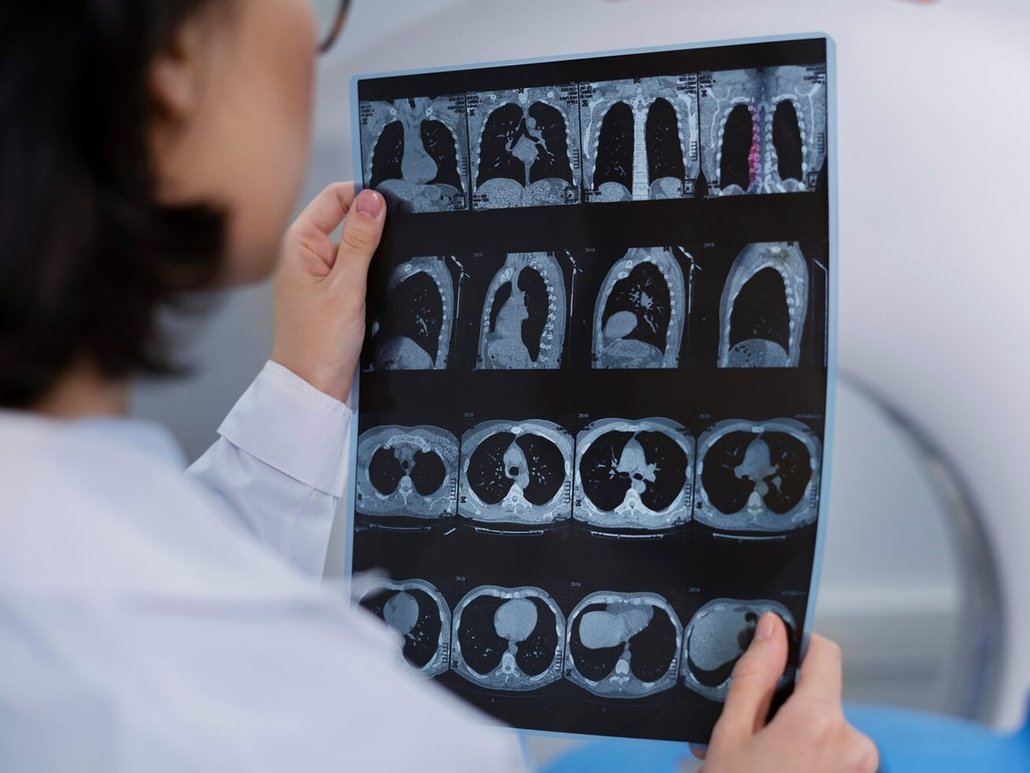
If you’re suffering from any type of chest disease, your pulmonologist will most likely recommend that you get either a chest X-ray or chest CT scan. Both of these procedures are instrumental in helping your doctor determine the source of your symptoms, as well as determine the best treatment plan for your specific needs. During our extensive years of practice, we’ve come to realize that most of our patients get lost between the two procedures and don’t understand the actual difference.

Although it’s not crucial for you to understand every minute detail of each procedure, it is important to understand the key differences between a chest X-ray and a chest CT scan before you elect to undergo one. Therefore, we’ve decided to devote one of our blogs to a clarification of what each procedure means and what the main differences between a chest X-ray and a chest CT scan are. 

What Is A Chest X-ray?

Chest X-ray is an imaging procedure that uses a very small amount of radiation, which quickly goes through your body in order to capture an internal image of your chest. A chest X-ray helps to indicate abnormal formations or a large variety of chest diseases such as pneumonia, cystic fibrosis, emphysema, cancer, etc. In addition, a chest X-ray is often used for an emergency diagnosis due to its fast and easy usage.

What is a Chest CT Scan? 

Chest CT Scan is a more detailed type of chest X-ray that compounds the power of X-rays and computers to deliver a 3D view of your chest. A CT scan makes a number of detailed slices (pictures), which then are merged into one projection. This creates a clear view that shows the position, shape, and size of the organs in your chest.

What Are The Main Differences Between A Chest X-Ray And A Chest CT Scan?

  1. Chest CT scan allows for a more detailed view compared to a chest X-ray. For example, a chest X-ray may identify an abnormality, but a chest CT scan should be able to show the exact location and examine the nature of a formation.
  2. Chest X-ray provides a 2D image, while a chest CT scan is able to produce a 3D view of your organs.
  3. An X-ray is built to examine dense tissues, while a CT scan is better able to capture bones, soft tissues and blood vessels all at the same time. 
  4. X-ray equipment is much smaller and less complex than a CT scan since a CT scanner needs to rotate around the patient being scanned.
  5. Chest X-ray is a good low-cost, first-look exam. In order to move forward with your diagnosis and treatment, you might have to do a chest CT scan to have a better picture.

Making The Decision

 By now you should be able to better understand the key differences between a chest X-ray and a chest CT scan, but it’s ok to still have questions. Don’t rush to decide which approach suits you the best. Remember, all instances are different and require an individual approach. Consult your physician, who will be able to answer any questions you have and prescribe the test necessary for your particular condition. In case you need help, just make an appointment with one of our physicians or schedule your chest X-ray or chest CT scan as soon as possible.  

https://pulmonaryassociatesofbrandon.com/wp-content/uploads/2017/09/Chest-CT-Scan.jpg 948 1263 admin https://pulmonaryassociatesofbrandon.com/wp-content/uploads/2026/10/logotipo.png admin2017-09-07 15:41:442026-10-27 22:22:59What’s The Difference Between A Chest X-Ray And A Chest CT Scan?

What Is the Circadian Rhythm And How Does It Affect Sleep?

21 julio, 2017/in Sleep Medicine

If you have trouble getting to sleep or waking up at a normal hour, then you may have heard someone tell you that your circadian rhythm may be off. But what is circadian rhythm exactly? How does this sleep disorder affect your ability to sleep?

The short answer is that your circadian rhythm is your internal body clock, a roughly 24-hour cycle that dictates when you feel drowsy and when you feel alert. According to Dr. Rolando Sanchez, “the circadian rhythm is a cycle of hormones that tells you when to sleep. Some people, such as overnight workers, are more prone to have circadian problems.”

How Does the Circadian Rhythm Disorder Work?

So what are circadian rhythms? The word circadian comes from two Latin words circa (meaning around) and Diem (meaning day), which means that a circadian rhythm is any endogenous biological timing mechanism that works on a 24-hour cycle. Endogenous means that it is internal and self-sustained, but in the case of human circadian rhythm it is also regulated and adjusted by external factors such as exposure to sunlight, temperatures, and sleep schedule.

The circadian rhythm is regulated by the hypothalamus, a region in the brain. The hypothalamus is the area of the brain that is responsible for the creation of many hormones and the maintenance of homeostasis, or the body’s status quo. Hypothalamic hormones regulate temperature, thirst, hunger, mood, sex drive, and sleep. The hypothalamus is also responsible for distributing hormones throughout the rest of the body.

Melatonin is one of these hormones that is regulated in the hypothalamus. Melatonin is distributed in accordance with light exposure. At night, when it is dark your eyes send a signal to your hypothalamus which then sends a signal to the body to release melatonin which makes you tired. This tends to happen relative to the 24-hour cycle of the circadian rhythm, but that rhythm can get out of sync if a person is habitually not exposed to light.

> Sleep Medicine Treatment Options

Circadian Rhythm Disorders:

The key feature of circadian rhythm sleep disorder is continuous or occasional disruptions in sleep patterns. To put it simply, they are disruptions in a person’s circadian rhythm. These disorders come in a few different forms, but they are usually caused by a mismatch in the hormone cycle of the rhythm and the external factors that influence it. So, people who work nonstandard hours or live in areas that stay light or dark for extended periods of time are most likely to be affected.

Scientists are still doing research on circadian rhythm sleep, and other possible causes and risk factors for disorders. Some studies suggest depression, obesity, diabetes, and bipolar disorder as being linked to circadian rhythm disorders. Let’s look at a few common disorders:

  • Jet Lag: You have probably experienced this or known someone who has experienced jet lag but never known that it is a disorder of your circadian rhythm. The conflict between the body’s internal rhythm and the new time zone can cause disruptions in sleep patterns. But this condition typically goes away in a short amount of time.
  • Shift Work Disorder: This affects people who frequently rotate shifts or work at night. Forcing yourself to stay awake all night habitually can cause the mismatch in your body clock that disrupts sleep patterns and leads to insomnia and excessive sleepiness.
  • Delayed Sleep Phase Disorder: This disorder typically occurs in adolescents and young adults. It results in people who cannot get to bed until 2 a.m. or later, and can lead to impairment at work or school and daytime sleepiness. Unlike jet lag, this is a recurring condition that can persist for years.
  • Advanced Sleep Phase Disorder: This disorder is typically seen in the elderly. It can be identified by early bedtimes and early morning awakening. People with this disorder may wake up at 3 a.m. and not be able to get back to sleep. This is also a recurring condition that can persist for years.
  • Narcolepsy: Narcolepsy can be a serious problem in which people experience intense daytime sleepiness and uncontrollable episodes of falling asleep in the daytime despite getting adequate sleep at night.

More Information on Circadian Rhythm Disorder

Sleep deprivation can be a very serious thing, and if you experience it you should undergo a sleep study to see what is causing it. The Pulmonary Associates of Brandon offer state of the art equipment and comfortable environments to undergo sleep studies and get you on the way to restful, normal sleep.

https://pulmonaryassociatesofbrandon.com/wp-content/uploads/2018/03/Insomnia.jpg 948 1263 admin https://pulmonaryassociatesofbrandon.com/wp-content/uploads/2026/10/logotipo.png admin2017-07-21 18:55:122026-10-27 22:26:38What Is the Circadian Rhythm And How Does It Affect Sleep?

Search

Search Search

Table of Content

Categories

Archive

Search

Search Search

Where Quality Care is Just a Breath Away!

  • Privacy Policy

Menu

  • Welcome
  • Services
    • Lung health services
    • Sleep Medicine
  • Patients
  • Our Team
    • FAQ
  • News
  • About us
  • Contact

Opening Hours

Mo-Fr: 8:00-22:00
Sa: 8:00-24:00
So: 8:00-14:00

Call us or send a message

To request an appointment.
Call 813-681-4413, ext. 227.

Not for emergencies. If you are having a medical emergency, call 911. For urgent concerns, call our office at 813-681-4413.

Scroll to top Scroll to top Scroll to top