floridachest
  • Welcome
  • Services
    • Lung health services
    • Sleep Medicine
  • Patients
  • Our Team
    • FAQ
  • News
  • About us
  • Contact
  • en English
    • en English
    • es Español
  • Menu Menu
  • Welcome
  • Services
    • Lung health services
    • Sleep Medicine
  • Patients
  • Our Team
    • FAQ
  • News
  • About us
  • Contact

Tag Archive for: when is cystic fibrosis diagnosed

Cystic Fibrosis Testing: How It Works
24 mayo, 2018/in Lung health, News

}Cystic Fibrosis is a very serious condition that can lead to life-threatening complications such as damaged airways and respiratory failure. That is why it’s vitally important that cystic fibrosis be diagnosed and treated as early in life as possible.

People with cystic fibrosis suffer from thicker than normal fluids, such as mucus, sweat, and digestive fluids. Rather than acting as lubricants, these fluids clog tubes, airways, and passageways. Living with the condition means serious medical attention in order to stay alive and active.

Getting a cystic fibrosis diagnosis early in life can really improve a person’s quality of life, as well as their life expectancy. But, how does cystic fibrosis testing work? At the Pulmonary Associates of Tampa Bay, our pulmonary specialists rely on 6 different diagnostic tests for cystic fibrosis. Read more to find discover how we get a cystic fibrosis diagnosis.

Cystic Fibrosis Testing

1. Newborn Screenings: Since 2010, all 50 U.S. states required newborns be screened for cystic fibrosis. The screening is simple, a blood test is taken to check the levels of a chemical made by the pancreas called immunoreactive trypsinogent, or IRT.

2. Sweat Test: During a sweat test, your specialist will trigger sweating in a small patch of skin. The sweat is then collected and tested for salinity. A high level of salt in the sweat confirms a cystic fibrosis diagnosis.

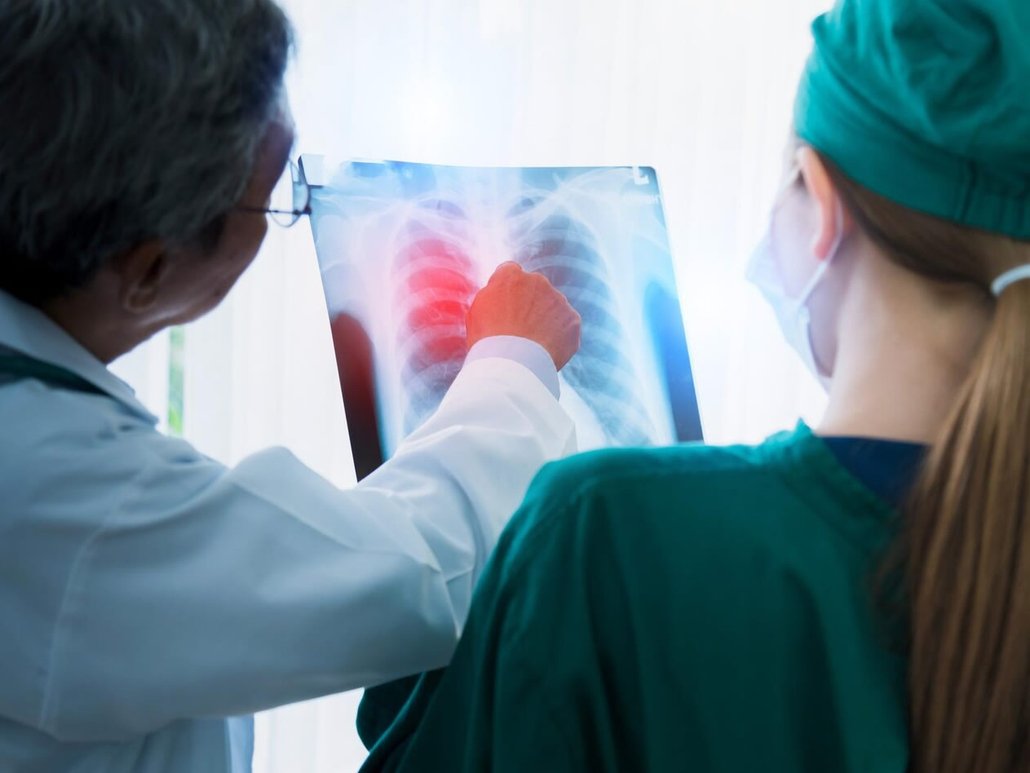
3. Chest X-Ray: A chest x-ray can signal cystic fibrosis by identifying inflamed or scarred lungs, and whether they are trapping air. An abnormal chest scan will lead your specialist to conduct a more conclusive diagnostic test for cystic fibrosis.

4. Sinus X-Ray: A sinus x-ray can catch indications of cystic fibrosis, such as sinusitis, which is a common complication of the condition. If you are suffering from frequent episodes of sinusitis, or chronic sinusitis, your specialist may suggest a more conclusive diagnostic test for cystic fibrosis.

5. Lung Function Tests: These tests measure how much air you breathe in and how much air you breathe out, as well as how your lungs distribute oxygen to your blood. How well your lungs perform in lung function tests can determine your lung health as well as whether you suffer from cystic fibrosis.

6. Sputum Culture: In this diagnostic test for cystic fibrosis, a sample of spit, or “sputum” is collected to be analyzed for the mucoid Pseudomonas bacteria. If present, it indicates an advanced form of cystic fibrosis which may need aggressive treatment.

More Information

To recap, cystic fibrosis testing can be most easily diagnosed with a newborn screening or a sweat test. Other tests like chest and sinus x-rays, and lung function tests can catch signs of cystic fibrosis. To determine the severity of cystic fibrosis, your specialist will likely recommend a sputum culture test.

To find out more information on cystic fibrosis and the different diagnostic tests feel free to contact us. To see a specialist about your cystic fibrosis, or to test yourself for cystic fibrosis, please book an appointment.


https://pulmonaryassociatesofbrandon.com/wp-content/uploads/2018/05/Cystic-Fibrosis-Testing.jpg 948 1263 admin https://pulmonaryassociatesofbrandon.com/wp-content/uploads/2026/10/logotipo.png admin2018-05-24 15:55:342026-10-27 22:00:30Cystic Fibrosis Testing: How It Works

The Signs and Symptoms Of Cystic Fibrosis

17 abril, 2018/in For Pulmonary Patients, Lung health

Cystic fibrosis is a serious pulmonary condition that requires careful medical attention and treatment. Diagnosing cystic fibrosis early can help manage the condition and greatly improve a person’s quality of life and expectancy. Today, diagnostic tests can safely be performed in the US on children as young as one-month, which allows early detection of cystic fibrosis before symptoms even present themselves.

For people who were not screened at a young age, it’s especially important to know the signs and symptoms of cystic fibrosis. If you think that you or someone you know may be suffering from cystic fibrosis, here are some of the signs and symptoms to look out for, as well as some information on the condition.

What Is Cystic Fibrosis?

Cystic Fibrosis is an inherited, rare, and incurable disease that affects the cells that produce mucus, sweat and the digestive juices in a patient’s body, causing them to run thick and sticky instead of slippery and thin.

As a result, the secretions build up and block airways and other passageways, particularly in the lungs and the pancreas. Years ago, people who suffered from cystic fibrosis had a very short life expectancy. Today, people with the disease can live up to 30, 40, or 50 years old with proper treatment.

Signs And Symptoms Of Cystic Fibrosis

Detecting cystic fibrosis is extremely important in treating the disease, which may allow the person a better quality of life and a longer life expectancy. Recognizing the symptoms, though, can be tricky. Cystic fibrosis affects many areas of the body, therefore symptoms may seem unrelated.

For some people, the signs and symptoms of cystic fibrosis may not even present themselves until adolescence or adulthood, and in some, the symptoms may come and go, or worsen or improve over time. Because of these factors, it’s important to recognize some key red flags that may signal cystic fibrosis.

One key signal is a higher than normal amount of salt in a person’s sweat. Parents of children can usually tell just by kissing their children. Some atypical signs of cystic fibrosis may include recurrent pancreatitis and/or pneumonia, and infertility. Meanwhile, typical symptoms may involve the digestive system or the respiratory system.

Digestive Signs And Symptoms Of Cystic Fibrosis

The thick mucus caused by cystic fibrosis often blocks the tubes that carry digestive enzymes from the pancreas to the small intestine. This results in poor digestion and nutrient absorption and other issues, such as:

  • Poor weight gain and growth
  • Severe constipation, which may cause the rectum to protrude through the anus (rectal prolapse).
  • Intestinal blockage
  • Foul-smelling, greasy stool

Respiratory Signs And Symptoms Of Cystic Fibrosis

People with cystic fibrosis tend to suffer from blocked airways and respiratory passageways due to the accumulation of the thick mucus. This build-up makes breathing difficult and causes other issues, such as:

  • Inflamed nasal passageways and a stuffy nose
  • Recurrent lung infections
  • Breathlessness
  • Wheezing
  • Exercise intolerance
  • A persistent cough that may produce mucus

Cystic Fibrosis is a serious disease that should be well monitored and cared for. Despite its challenges, with proper and daily treatment, people who suffer from the signs and symptoms of cystic fibrosis are able to go to school, work, and generally live out a regular life. For more information on cystic fibrosis or to find out whether you or someone you know may be suffering from the pulmonary condition, contact us or book an appointment today.

https://pulmonaryassociatesofbrandon.com/wp-content/uploads/2018/04/Signs-and-Symptoms.jpg 948 1263 admin https://pulmonaryassociatesofbrandon.com/wp-content/uploads/2026/10/logotipo.png admin2018-04-17 18:40:462026-10-27 22:06:11The Signs and Symptoms Of Cystic Fibrosis

Search

Search Search

Table of Content

Categories

Archive

Search

Search Search

Where Quality Care is Just a Breath Away!

  • Privacy Policy

Menu

  • Welcome
  • Services
    • Lung health services
    • Sleep Medicine
  • Patients
  • Our Team
    • FAQ
  • News
  • About us
  • Contact

Opening Hours

Mo-Fr: 8:00-22:00
Sa: 8:00-24:00
So: 8:00-14:00

Call us or send a message

To request an appointment.
Call 813-681-4413, ext. 227.

Not for emergencies. If you are having a medical emergency, call 911. For urgent concerns, call our office at 813-681-4413.

Scroll to top Scroll to top Scroll to top