
floridachest
  • Welcome
  • Services
    • Lung health services
    • Sleep Medicine
  • Patients
  • Our Team
    • FAQ
  • News
  • About us
  • Contact
  • en English
    • en English
    • es Español
  • Menu Menu
  • Welcome
  • Services
    • Lung health services
    • Sleep Medicine
  • Patients
  • Our Team
    • FAQ
  • News
  • About us
  • Contact

Tag Archive for: chest scan

What’s The Difference Between A Chest X-Ray And A Chest CT Scan?
7 septiembre, 2017/in For Pulmonary Patients

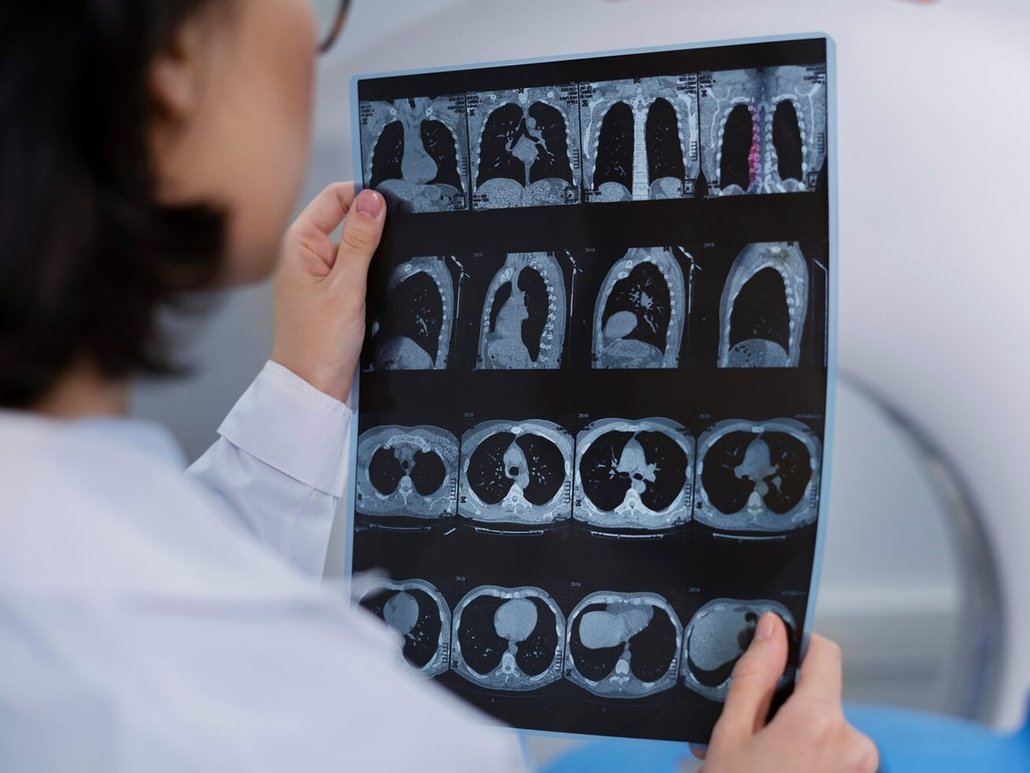
If you’re suffering from any type of chest disease, your pulmonologist will most likely recommend that you get either a chest X-ray or chest CT scan. Both of these procedures are instrumental in helping your doctor determine the source of your symptoms, as well as determine the best treatment plan for your specific needs. During our extensive years of practice, we’ve come to realize that most of our patients get lost between the two procedures and don’t understand the actual difference.

Although it’s not crucial for you to understand every minute detail of each procedure, it is important to understand the key differences between a chest X-ray and a chest CT scan before you elect to undergo one. Therefore, we’ve decided to devote one of our blogs to a clarification of what each procedure means and what the main differences between a chest X-ray and a chest CT scan are. 

What Is A Chest X-ray?

Chest X-ray is an imaging procedure that uses a very small amount of radiation, which quickly goes through your body in order to capture an internal image of your chest. A chest X-ray helps to indicate abnormal formations or a large variety of chest diseases such as pneumonia, cystic fibrosis, emphysema, cancer, etc. In addition, a chest X-ray is often used for an emergency diagnosis due to its fast and easy usage.

What is a Chest CT Scan? 

Chest CT Scan is a more detailed type of chest X-ray that compounds the power of X-rays and computers to deliver a 3D view of your chest. A CT scan makes a number of detailed slices (pictures), which then are merged into one projection. This creates a clear view that shows the position, shape, and size of the organs in your chest.

What Are The Main Differences Between A Chest X-Ray And A Chest CT Scan?

  1. Chest CT scan allows for a more detailed view compared to a chest X-ray. For example, a chest X-ray may identify an abnormality, but a chest CT scan should be able to show the exact location and examine the nature of a formation.
  2. Chest X-ray provides a 2D image, while a chest CT scan is able to produce a 3D view of your organs.
  3. An X-ray is built to examine dense tissues, while a CT scan is better able to capture bones, soft tissues and blood vessels all at the same time. 
  4. X-ray equipment is much smaller and less complex than a CT scan since a CT scanner needs to rotate around the patient being scanned.
  5. Chest X-ray is a good low-cost, first-look exam. In order to move forward with your diagnosis and treatment, you might have to do a chest CT scan to have a better picture.

Making The Decision

 By now you should be able to better understand the key differences between a chest X-ray and a chest CT scan, but it’s ok to still have questions. Don’t rush to decide which approach suits you the best. Remember, all instances are different and require an individual approach. Consult your physician, who will be able to answer any questions you have and prescribe the test necessary for your particular condition. In case you need help, just make an appointment with one of our physicians or schedule your chest X-ray or chest CT scan as soon as possible.  

https://pulmonaryassociatesofbrandon.com/wp-content/uploads/2017/09/Chest-CT-Scan.jpg 948 1263 admin https://pulmonaryassociatesofbrandon.com/wp-content/uploads/2026/10/logotipo.png admin2017-09-07 15:41:442026-10-27 22:22:59What’s The Difference Between A Chest X-Ray And A Chest CT Scan?

What Does It Mean If My Chest Scan Is Abnormal?

4 mayo, 2017/in For Pulmonary Patients

An abnormal chest scan could mean many things. It could be one problem, or a litany of problems, or it could be nothing serious. Dr. Rolando Sanchez MD says an abnormal chest x-ray could show an “enlarged heart, fluid in the lungs, air pockets, pneumonia, among many other things.” Pulmonary physicians can help read these scans and determine the particularities of any abnormality.

What Is A Chest Scan?

Two common forms of chest scans are chest x-rays and chest CTs. The x-ray is a more basic procedure and the CT is more detailed. It uses x-ray technology in conjunction with computer imaging software to create a more detailed picture of the lungs.

Chest x-rays are fast and painless tests that use electromagnetic waves to produce pictures of the structures in and around your chest. These tests are used to diagnose and monitor such conditions as pneumonia, heart failure, lung cancer, tuberculosis, sarcoidosis, and scarring of the lung tissue.

Chest CT scans or Computed Tomography scans are also painless tests. They provide more detailed images. They often create cross-sectional images of the lungs often called “slices”, and they also use computer technology to create 3-D models of the lungs. These tests are usually follow-up tests to abnormal chest x-rays. They are often used to diagnose certain lung conditions such as check to see if you have certain lung problems such as a tumor, excess fluid around the lungs that is known as pleural effusion, pulmonary embolism, emphysema, tuberculosis, and pneumonia.

Abnormal Scans

If you are experiencing symptoms such as shortness of breath, coughing, wheezing, chronic mucus production, etc. then your physician may order a chest x-ray. If the x-ray is abnormal or the physician sees something in the x-ray, then they might order a CT scan or even a PET scan to further diagnose what showed up on the x-ray.

Conditions such as heart failure, pneumonia, lung cancer, tuberculosis, sarcoidosis, pleural effusion, embolisms, emphysema, and lung scarring would all show up on chest scans in various ways.

Pulmonary Nodules

Pulmonary nodules are small spots on the lungs that may show up on x-rays or CT scans. They are often causes of serious concern for patients even thought they do not have to be. A pulmonary nodule is usually less than 3cm in diameter, and can sometimes be in the lungs for years without the patient knowing. They do not always cause symptoms.

Nodules show up as white spots on imaging scans. Your physician will probably want to take a biopsy of the nodule to see if it is malignant or cancerous. Less than five percent of pulmonary nodules cause cancer, but it is better to be safe than sorry. Other causes of these nodules include infection, neoplasms, or sarcoidosis.

What Next?

The experts at Pulmonary Associates of Brandon are equipped to diagnose and treat a variety of pulmonary diseases and conditions such as asthma, bronchitis, acute and chronic respiratory failure, lung cancer, pulmonary hypertension, lung infections, chronic obstructive pulmonary disease (COPD), and sleep disorders. They can help you determine what is causing your abnormal chest scan, and can help decide the best path to take for it. The team of highly specialized physicians will know the best way to analyze a chest scan and the most effective way to proceed from any abnormalities.

https://pulmonaryassociatesofbrandon.com/wp-content/uploads/2017/05/medical-check.jpg 948 1263 admin https://pulmonaryassociatesofbrandon.com/wp-content/uploads/2026/10/logotipo.png admin2017-05-04 15:37:472026-10-27 22:28:09What Does It Mean If My Chest Scan Is Abnormal?

Search

Search Search

Table of Content

Categories

Archive

Search

Search Search

Where Quality Care is Just a Breath Away!

  • Privacy Policy

Menu

  • Welcome
  • Services
    • Lung health services
    • Sleep Medicine
  • Patients
  • Our Team
    • FAQ
  • News
  • About us
  • Contact

Opening Hours

Mo-Fr: 8:00-22:00
Sa: 8:00-24:00
So: 8:00-14:00

Call us or send a message

To request an appointment.
Call 813-681-4413, ext. 227.

Not for emergencies. If you are having a medical emergency, call 911. For urgent concerns, call our office at 813-681-4413.

Scroll to top Scroll to top Scroll to top